
Why Did My Scar Heal Poorly? Understanding Genetics, Tension, and Healing

Have you ever wondered why your scar looks more noticeable than you expected, even months after your skin has healed?
Whether your scar developed after surgery, an injury, or another skin condition, the way it heals can depend on several factors. Some scars become raised, widened, darker, or lighter than the surrounding skin.
Understanding why your scar healed the way it did is an important first step toward exploring your treatment options.
At Halo Skin and Scar, we understand that every scar is different. Our approach focuses on evaluating your individual concerns and helping you explore treatment options suited to your skin and scar.
1. Genetics Can Influence How Your Scar Heals

Your genetics can affect how your body responds to skin injuries and produces collagen during the healing process.
Some people are more likely to develop raised scars, including hypertrophic scars or keloids. Others may experience changes in skin pigmentation or scar texture.
If you have noticed that your scars tend to become thick, raised, or more noticeable over time, your natural healing response may be contributing to their appearance.
Although genetics cannot be changed, understanding your scar type can help guide appropriate treatment decisions.
2. Skin Tension Can Affect Scar Appearance

The amount of tension placed on a healing wound can influence how a scar develops.
For example, scars located near joints or areas that experience frequent movement may be exposed to repeated stretching.
Tension along a surgical incision can also contribute to a scar becoming wider or more noticeable as it heals.
This is one reason why scars from procedures such as tummy tucks, C-sections, and other surgeries may heal differently depending on their location and the surrounding skin.
3. Inflammation and Wound Healing

Inflammation is a normal part of your body's healing process. However, prolonged inflammation or complications during wound healing can affect the appearance of a scar.
Some scars remain red or raised for months, while others develop uneven texture or pigmentation changes.
The healing process varies from person to person, and scars may continue changing in appearance for a year or longer.
If your scar becomes increasingly painful, warm, swollen, or begins draining, seek medical evaluation rather than assuming these changes are part of normal scar healing.
4. Why Do Some Scars Become Darker or Lighter?
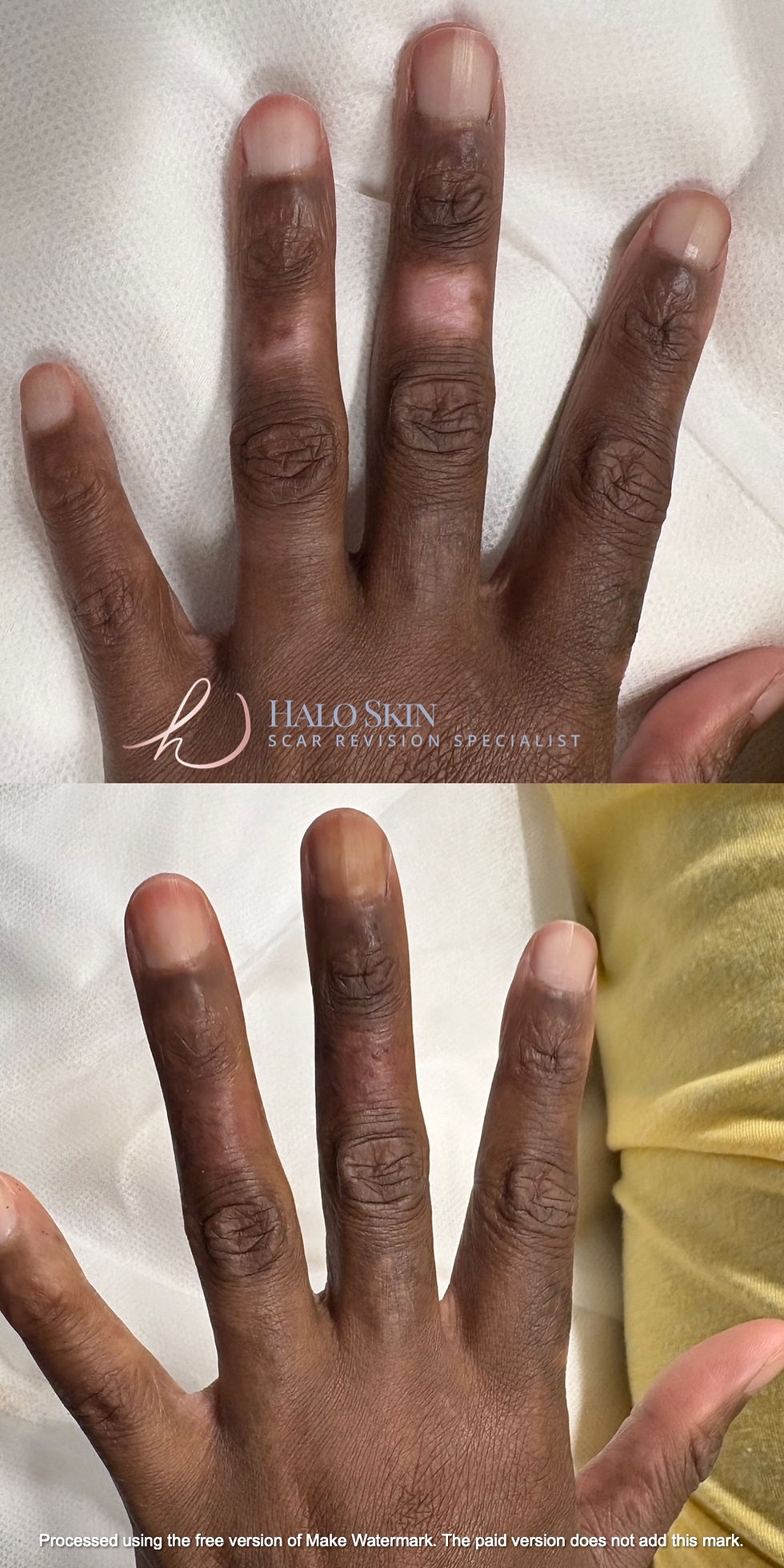
Changes in pigmentation can occur as the skin heals.
Some scars develop darker pigmentation, known as post-inflammatory hyperpigmentation. Others may become lighter than the surrounding skin as pigment production changes.
These differences can make a scar more noticeable, particularly when the surrounding skin has a different natural tone.
The type of pigmentation change, the age of the scar, and the condition of the surrounding skin all influence which treatment options may be appropriate.
5. Can a Poorly Healed Scar Still Be Improved?


A scar that has healed with uneven texture, discoloration, or visible differences from the surrounding skin may still have treatment options.
Depending on the scar's characteristics, professional treatments may help improve its appearance.
Clinical scar camouflage is one option that may be considered for certain mature, stable scars with pigment differences. Other scar concerns may require different approaches.
Not every scar is suitable for camouflage, and treatment cannot guarantee complete scar removal or an exact match with the surrounding skin.
A professional consultation can help determine whether your scar is ready for treatment and which options may be appropriate for your individual situation.
6. When Should You Consider a Scar Treatment Consultation?

If your scar has remained noticeable after healing, or you are concerned about its color, texture, or overall appearance, a professional assessment can help you better understand your options.
During a consultation, your scar's history, location, appearance, and healing progress can be reviewed to help determine suitable next steps.
You do not have to decide which treatment is appropriate on your own.
Ready to Explore Your Scar Treatment Options?
Every scar has a different history, and your treatment plan should reflect your individual needs.
At Halo Skin and Scar, we offer personalized consultations to help you understand your scar and explore available treatment options.
BOOK A SCAR TREATMENT CONSULTATION
Learn more about Halo Skin and Scar:


Comments