_edited.jpg)
The Truth About Scar Camouflage Trainings in 2026

Updated: Sep 3
And Why Most Courses Leave Practitioners Unprepared
If you've been researching scar camouflage training, you've likely noticed a troubling pattern. Most programs teach pigment implantation, but very few teach scar assessment, skin science, client selection, corrective protocols, and long-term case management.
This gap in education is exactly why many practitioners struggle after completing their first scar camouflage course.
Scar Camouflage Is Not Just Tattooing
Many beauty professionals enter scar camouflage believing it is simply a matter of matching pigment to skin tone. In reality, successful scar camouflage requires understanding:
Scar maturation stages
Hypopigmentation vs hyperpigmentation
Scar texture and tissue density
Fitzpatrick skin types
Pigment science
Color theory
Client contraindications
Proper machine and needle selection
Without these fundamentals, even talented tattoo artists can produce inconsistent results.
Why Advanced Scar Camouflage Training Matters
The difference between a beginner and a true scar specialist is the ability to analyze tissue before touching a machine.
Advanced scar camouflage training should teach students how to:
Evaluate surgical scars
Assess stretch marks
Identify poor candidates
Determine when laser or skincare interventions should occur before tattooing
Create custom pigment blends for diverse skin tones
Troubleshoot challenging cases
This clinical approach dramatically improves patient outcomes.
The Growing Demand for Scar Specialists
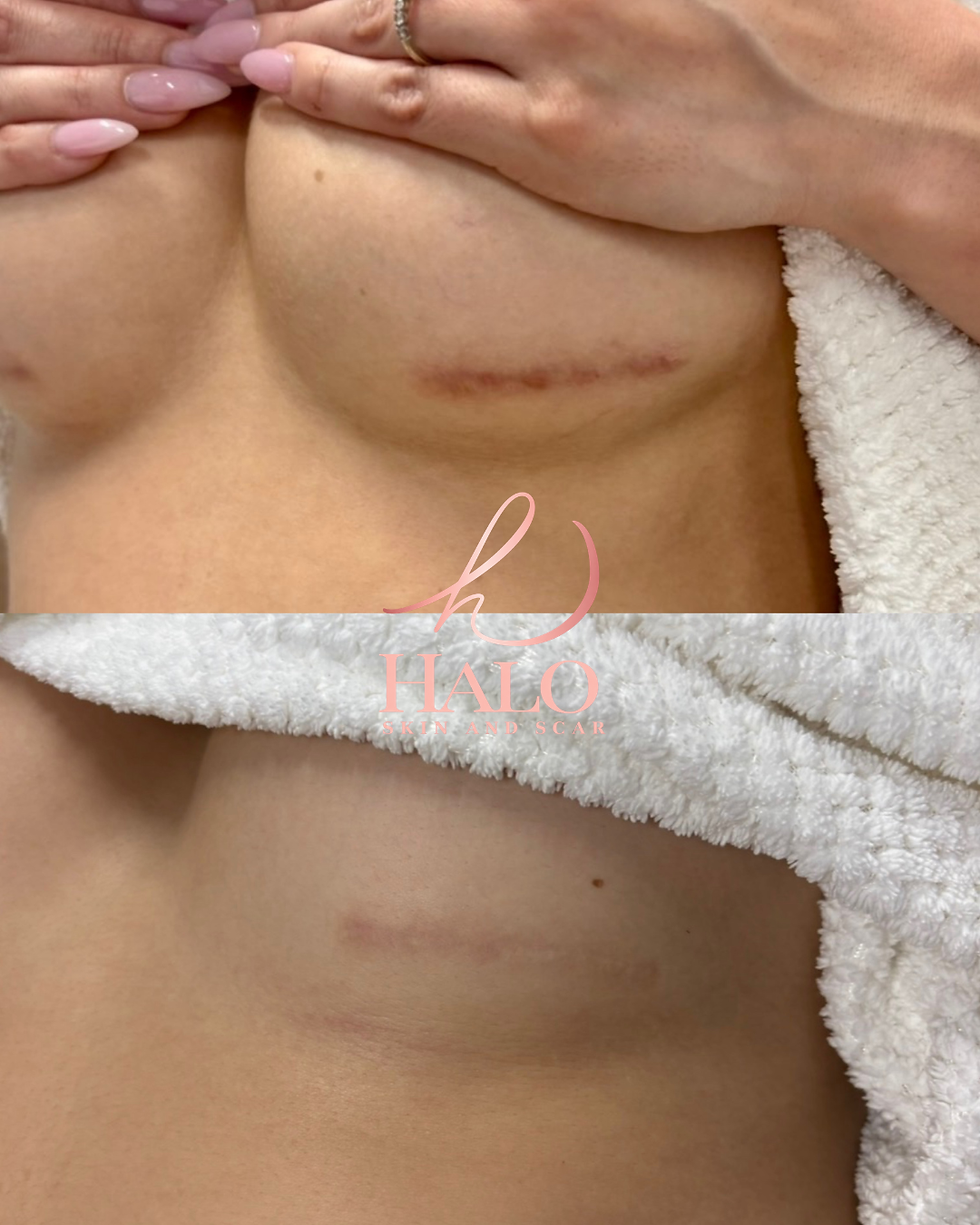
Millions of people live with surgical scars, tummy tuck scars, breast augmentation scars, facelift scars, C-section scars, traumatic injury scars, burns, acne scars, and stretch marks.
As awareness grows, more patients are seeking providers who specialize exclusively in scar revision and camouflage.
The opportunity for trained practitioners has never been greater.
What To Look For In A Scar Camouflage Certification Program
Before enrolling in any scar camouflage course, ask:
Will I work on real models?
Is mentorship included?
Will I receive case reviews?
Do I learn color theory specific to scars?
Are business systems included?
Will I receive ongoing support after class?
The best programs focus on competency, not just certification.
At Halo Skin & Scar, students receive hands-on scar camouflage training, advanced pigment formulation strategies, case study analysis, clinical mentorship, and real-world business guidance designed to help them confidently build a scar camouflage practice.
The goal isn't simply to complete a course.
The goal is mastery.


Comments